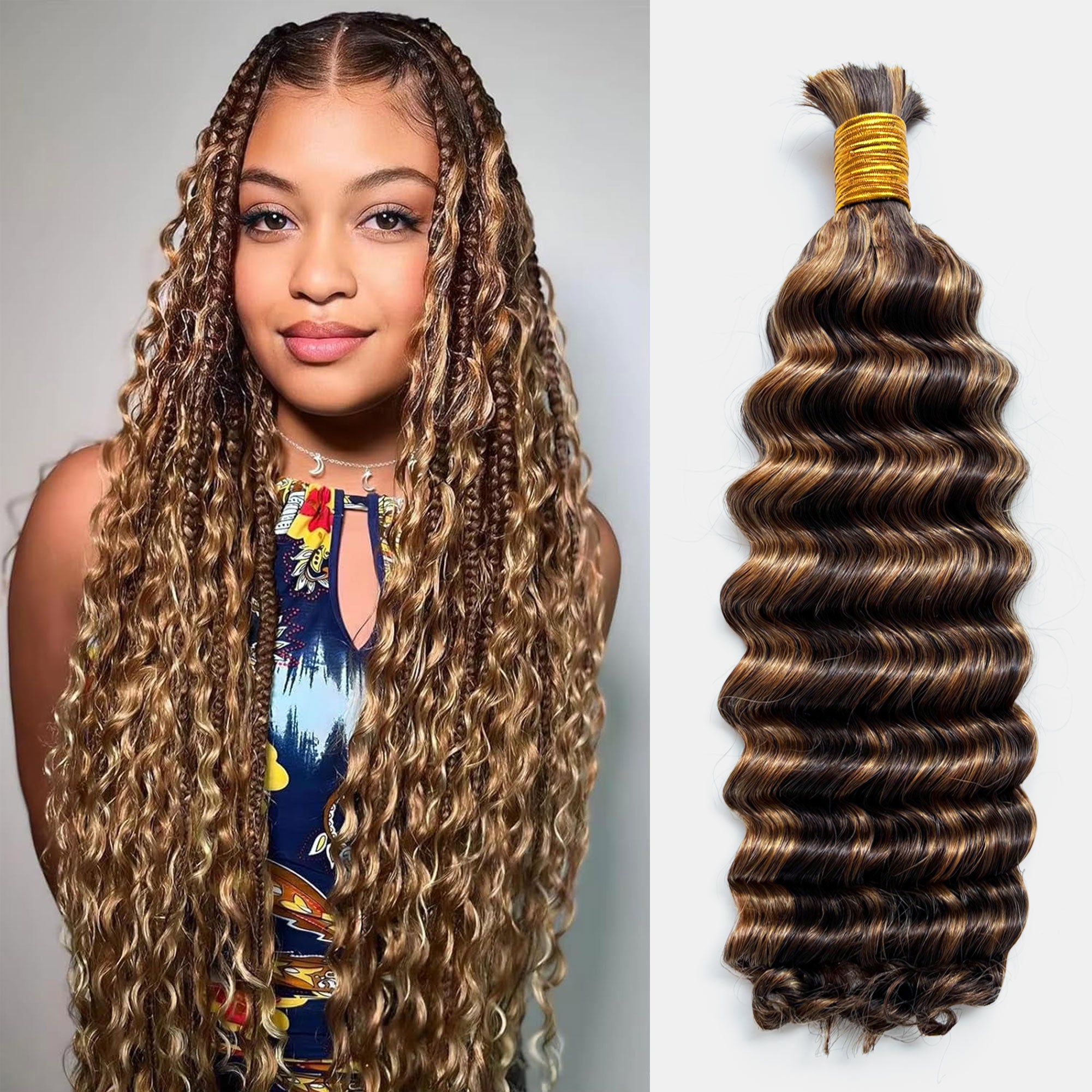



Why Do Some Wigs Cost $30 and Others Over $1,000?
A factory insider explains where materials differ — and where your money actually goes

Are all wigs made of real human hair? It is the first question many first-time buyers ask us. The answer is: not necessarily. Wig materials vary widely, and different materials come with different prices and different wearing experiences.
Working on the factory floor, our most direct answer is this: the price gap comes first from the material, and second from the craftsmanship.
The material decides how a wig feels in your hand, whether it can be dyed and heat-styled, and how long it will last. The craftsmanship decides how natural and comfortable it is to wear. This article skips the sales talk and walks through each wig material, one by one, from a factory point of view.
The Five Common Hair Materials, One by One
Five materials are common on the market: human hair, synthetic fiber, heat-resistant fiber, protein fiber, and animal hair — plus blended products, where human hair is mixed with other materials.
The names sound similar; the pros and cons are completely different. Start with the overview table, which puts each product’s strengths and weaknesses side by side, then read the detail below.
| Material | Pros | Cons | Price Position |
|---|---|---|---|
| Human hair | Most natural feel and shine; can be dyed, permed, and heat-styled; lasts a long time with proper care | Hard to source and supply is limited; highest price; needs care just like your own hair | Highest — from a few hundred to thousands, even tens of thousands |
| Synthetic fiber | Affordable and mass-produced; style is set at the factory, fine for photos and occasional events | Shine looks too glossy and can read as fake; prone to static and tangling; regular types are not heat-safe, melt or deform with heat, and cannot be dyed | Affordable — generally inexpensive |
| Heat-resistant fiber | Affordable; heat-safe, so you can use a curling iron or blow dryer — more practical than regular synthetic | Still a synthetic fiber at its core; feel, shine, and lifespan fall short of human hair; cannot be dyed | Affordable — generally inexpensive |
| Protein fiber | Softer than regular synthetic; shine is closer to real hair and less glossy; affordable | Limited dyeing and perming ability; less durable than human hair for long-term wear | Affordable — generally inexpensive |
| Animal hair | Affordable | Texture is not quite the same as human hair; dye and perm results are unstable — ask which animal hair is used and in what proportion | Affordable — generally inexpensive |
| Human hair blends | Cheaper than pure human hair, so the entry price is lower; the human hair portion gives a feel partly close to real hair | Dyes unevenly and curls inconsistently; tangles and frizzes more easily; if the blend ratio is not stated, it can be sold as if it were pure human hair | In between — between human hair and synthetic fiber |
Put side by side, the difference is clear:
- Human hair wins on natural look, dyeing and heat styling, and lifespan — and loses on price.
- Synthetic types win on price and lose on natural look and lifespan.
- Blends sit in the middle: a little cheaper, with uneven dyeing and easier tangling as the trade-off.
Here is each one in detail.
Human Hair
Real human hair. It is expensive because it is hard to get: hair has to be collected strand by strand and sorted by length and direction, and supply is naturally limited.
As a rule, human hair wigs run from a few hundred dollars to thousands, even tens of thousands — the highest price of the five materials.
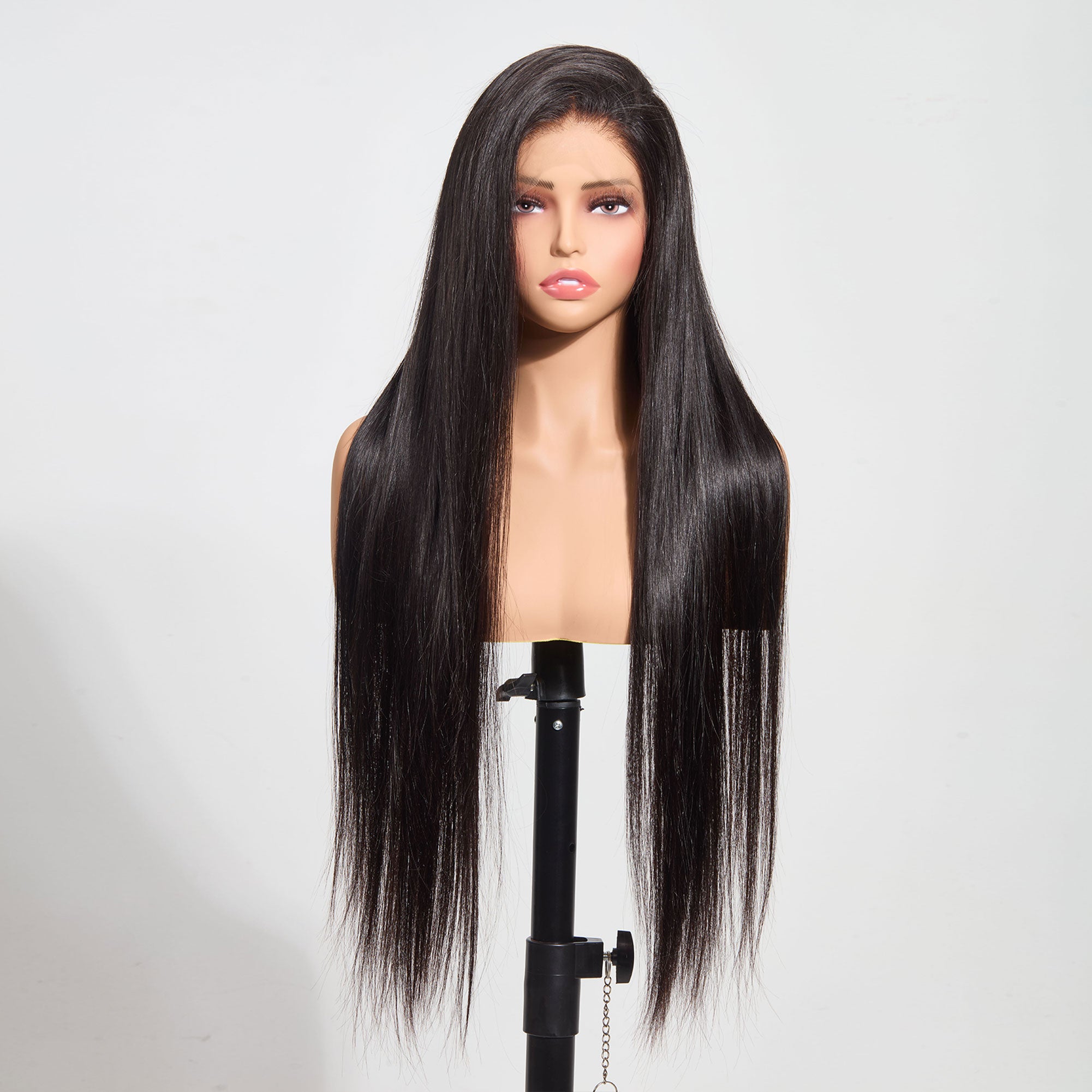
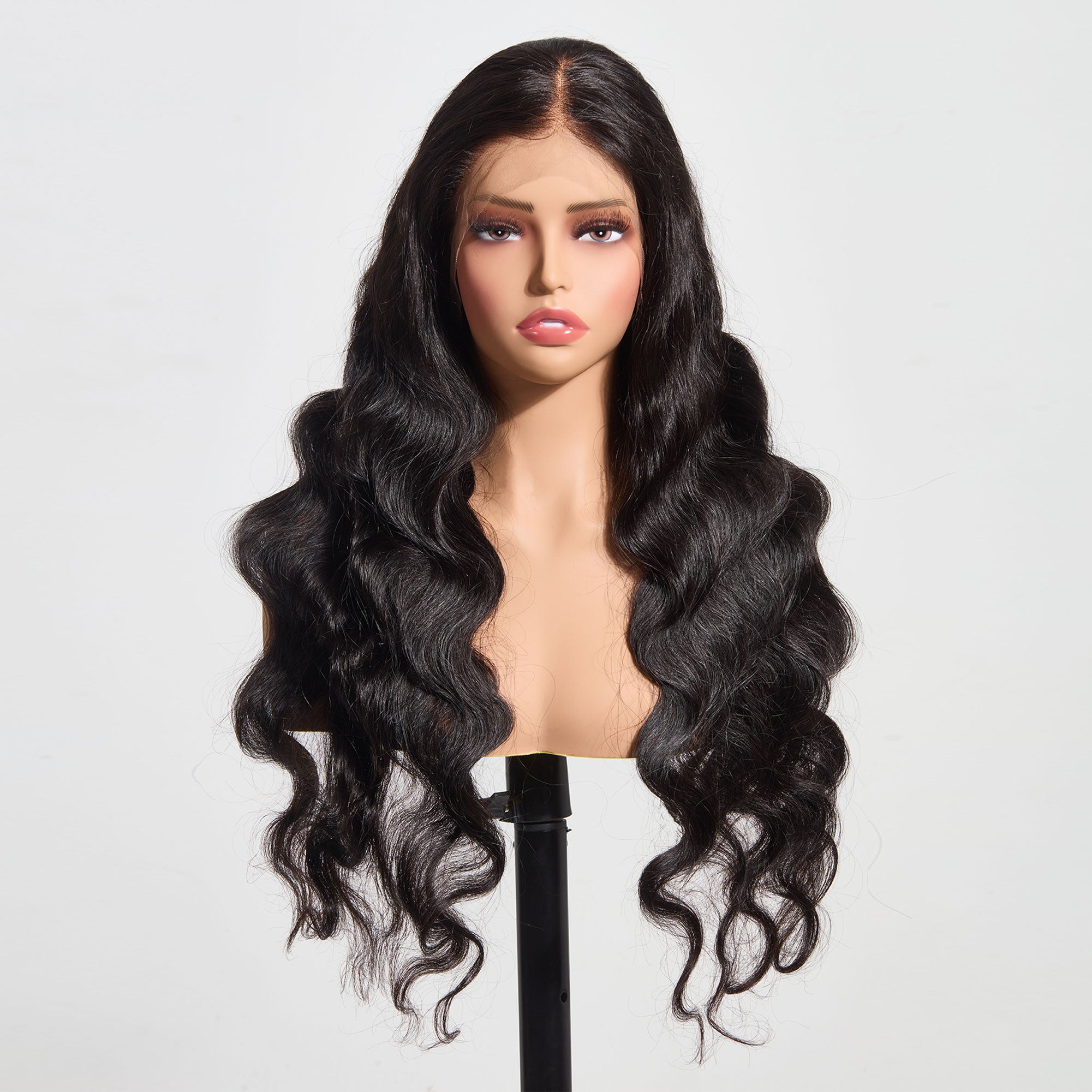
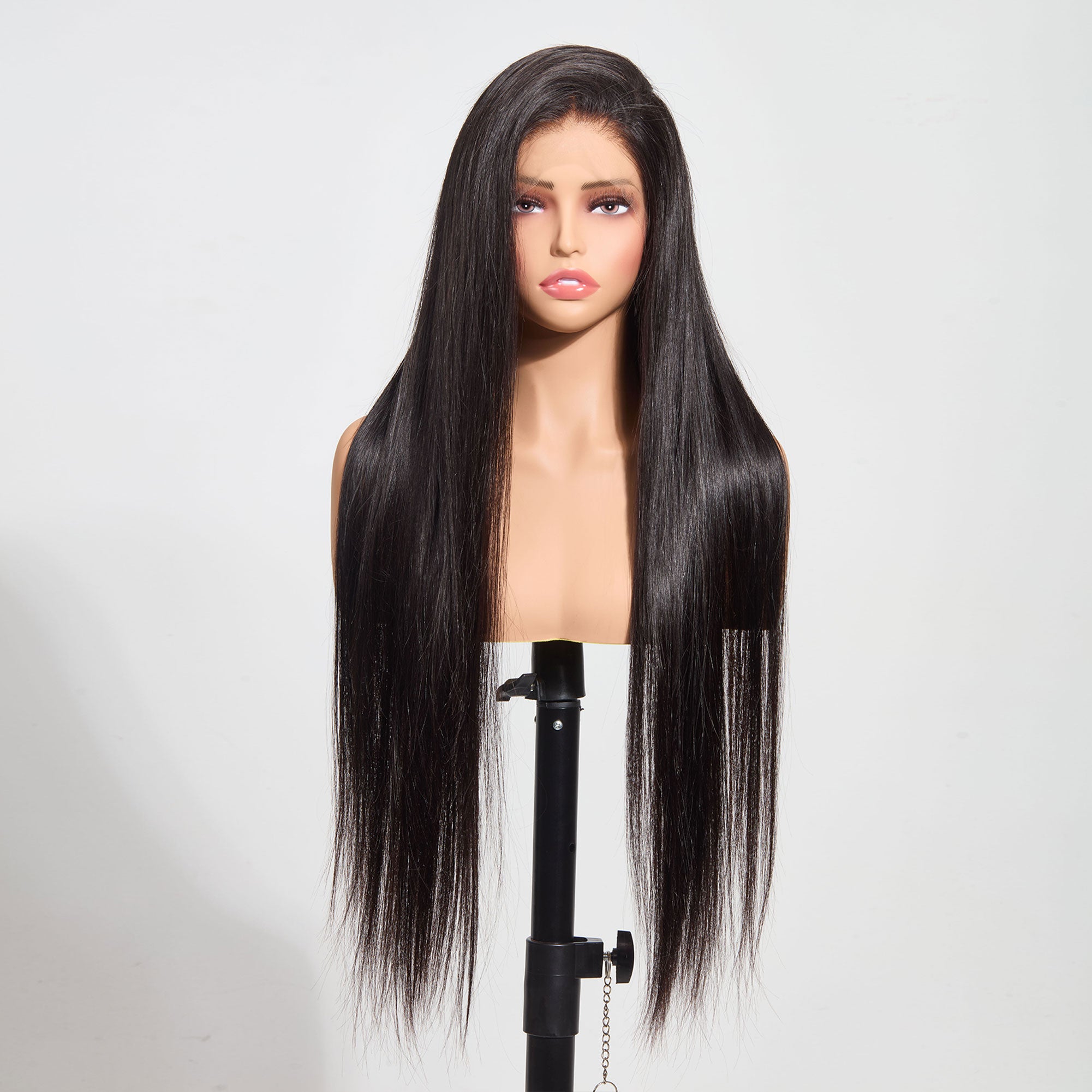
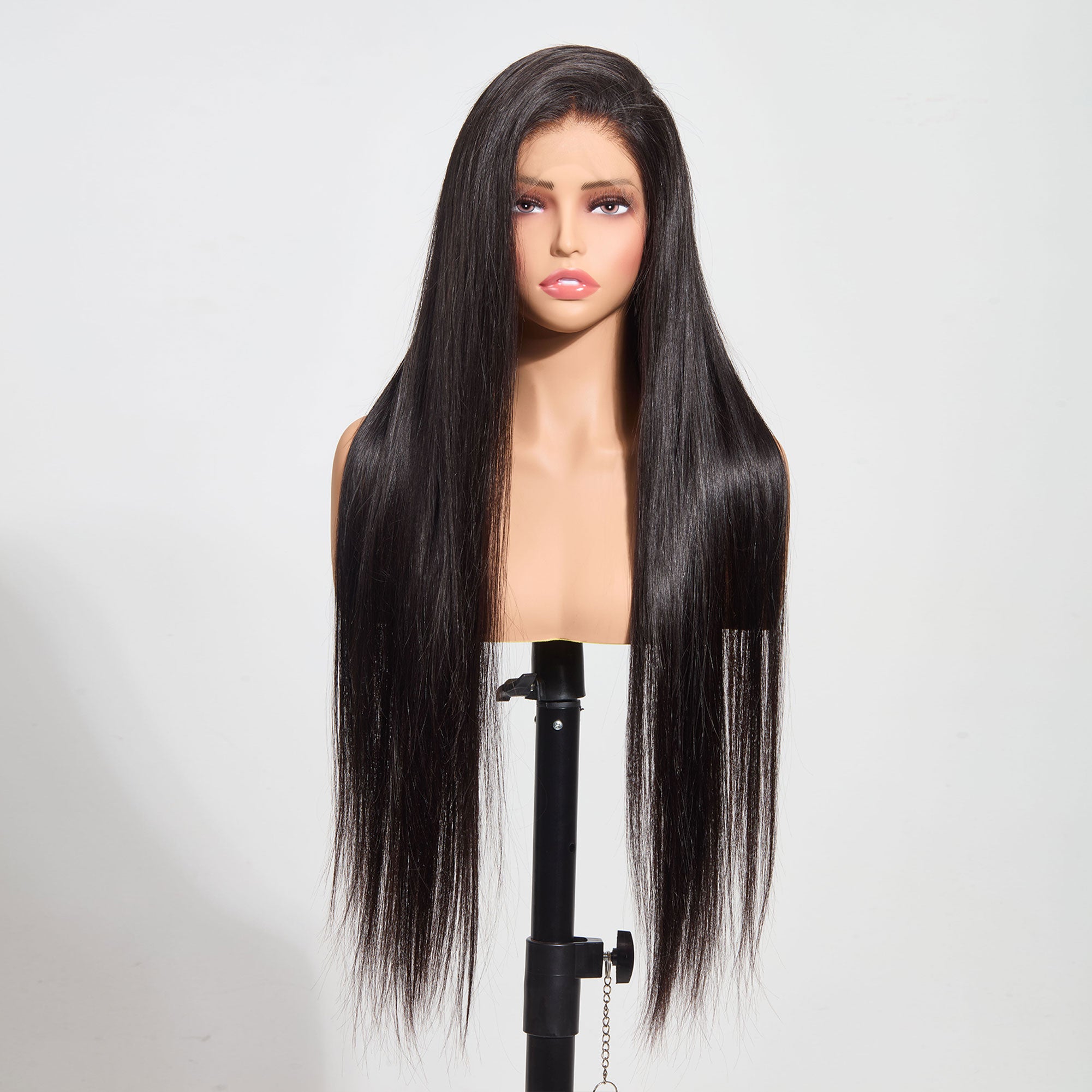
The benefits are also the most complete: the feel and shine are natural, and you can dye, perm, blow-dry, and curl it just like your own hair. With proper care, it lasts a long time.

Synthetic Fiber
Wigs made from drawn synthetic fiber. The raw material is produced industrially in bulk and is not limited by the supply of human hair, so prices are affordable and generally low.
The drawbacks are just as clear:
- The shine runs glossy and can look fake in natural light.
- The fiber has no cuticle, so it builds static and tangles easily.
- Regular synthetic is not heat-safe — high heat will deform it.
For a change of look, photos, or an event, it does the job perfectly well.

Heat-Resistant Fiber
Think of it as the heat-safe version of synthetic fiber. It tolerates a curling iron and blow dryer up to a certain temperature, which solves the regular synthetic problem of being ruined by one pass of heat, and the price is just as affordable.
But at its core it is still a synthetic fiber: its feel, shine, and lifespan still fall short of human hair, and it cannot be dyed.

Protein Fiber
Hair made from imitation protein fiber, designed to feel and shine more like real human hair. It is softer to the touch than regular synthetic, and its shine is less glossy. Prices are affordable and generally low.
Its ceiling is this: it is still not real hair, so its dyeing and perming ability is limited, and it is less durable than human hair for long-term wear.

Animal Hair
Hair made from animal hair, sometimes used on its own but more often blended into other materials. Prices are affordable.
Its texture is not quite the same as human hair, and its reaction to dyeing and perming is unstable, so when you buy, ask exactly which animal hair is used and in what proportion.
Not All “Human Hair” Is the Same Grade
Many customers assume that anything labeled “human hair” is all the same. In the factory, human hair falls into at least three grades — and that is a big reason human hair wigs themselves vary so much in price.
Virgin Hair: Untreated Raw Hair
Hair that has never been dyed or permed, with intact cuticles and the best quality. It is also the scarcest, so it costs the most. What the industry calls virgin hair is exactly this grade.
Remy Hair
Hair cut while keeping the same root-to-tip direction, so the cuticles all lie the same way and the hair resists tangling. That aligned direction is what “Remy” means.
Remy hair has to be sorted by hand, strand by strand, and that labor goes straight into the price.
Non-Remy Hair
Collected hair with mixed directions. The factory has to strip part of the cuticle with an acid wash, then rely on coatings such as silicone oil to make it feel smooth for a while.
It may feel silky at first, but after a few washes the coating wears off and the hair turns dry and tangles easily. It costs less to make, so it sells for less.
In other words, two wigs can both say “human hair” and look completely different after three months of wear, depending on whether the hair is virgin, Remy, or non-Remy.
When you shop, asking “is it human hair?” is not enough — ask one more question: what grade of human hair is it?

In Between: Human Hair “Blends”
Beyond the five materials above, there is one category that is easiest to overlook: human hair blends of every kind:
- Human hair blended with synthetic fiber.
- Human hair blended with protein fiber.
- Human hair blended with animal hair.
These products are priced between human hair wigs and other synthetic-fiber wigs. The logic is simple: the lower the share of human hair, the lower the cost and the lower the selling price — and a seller can attract buyers with near-human-hair claims at a noticeably lower price.
The problems show up after you wear it. The human hair portion can be dyed and permed; the blended synthetic fiber, protein fiber, or animal hair cannot, so the color comes out uneven and the curls come out inconsistent.
Different materials also rub differently, so the wig tangles and frizzes more easily over time.
If a wig only says “human hair material” without stating a ratio, or its price is clearly below comparable pure human hair products, ask one more question:
Is it 100% human hair, or is it blended — and if so, in what proportion?
Different Products, Different Prices, Different Markets
By now it should be clear: different materials mean different prices, and different markets.
Products made from synthetic fiber, heat-resistant fiber, protein fiber, and animal hair are affordable and serve customers who want to try a look, need temporary styling, or put price first.
Pure human hair products cost more and serve customers who wear a wig every day, restyle it often, and want it to last.
Both markets are real, and neither is “wrong.” What matters is not paying human hair money for a blended product — and not expecting a budget product to perform like human hair.
So before you choose a wig, be clear about which kind of buyer you are:
- For occasional photos and events: A low-priced material is a perfectly reasonable choice.
- For daily wear and commuting: The texture and lifespan of the material deserve serious thought.
The grade differences within human hair are covered above; next is the price gap that craftsmanship creates among human hair wigs themselves.

Even Within Human Hair, Price Comes Down to These Five Things
Set material type and grade aside, and human hair wigs can still differ several times over in price. On the factory cost sheet, the gap mainly comes from the five things below.
1. Length
The longer the hair, the less usable raw material there is. Long hair takes years to grow, and long lengths of virgin hair are scarce on the market to begin with — so with the same material, every step up in length moves the price up noticeably.
2. Remy Sorting
Remy hair means picking out hair that runs in the same root-to-tip direction — painstaking handwork.
The more carefully it is sorted, the less the finished wig tangles, and the higher the cost. Skip that step and the price drops, but the tangling problem is handed to the customer.
3. Full Ends
A bundle of hair is naturally uneven in length. The fuller and more even the ends, the more short hair has to be removed — and the more material is lost.
What the industry calls Double Drawn is the high full-end grade: it wastes more material, so it costs more. Wigs with thin, sparse ends are cheaper because all the short hair was left in.
4. Hand Craftsmanship
Machine-wefted hair is cheap to make and fast to ship. Lace closures and wigs knotted by hand, strand by strand, take workers a great deal of time — and the hairline and part look more natural for it.
The more handwork, the higher the price, and that gap is real labor.
5. Density and Amount of Hair
At the same length, more hair and higher density mean higher cost.
Density is not automatically better the higher it goes — it should match the style and the occasion — but the amount of hair used is one cost that cannot be hidden.

Don’t Just Compare the Price Tag — Compare Cost per Wear
From the factory’s point of view, the fairest way to compare prices is to spread the price over wearing time.
A cheap synthetic wig that tangles and frizzes beyond wearing after a few uses is not actually cheap per wear. A human hair wig costs more, but it can be washed and restyled again and again and, with proper care, stays with you a long time — spread out, it may not cost more at all.
Just as important is how you can use it. Human hair can be dyed, permed, blow-dried, and curled like your own hair — straight today, big waves tomorrow, and the color can be changed if you stop liking it. Synthetic and blended wigs mostly stay exactly as they left the factory.
If you wear a wig daily, for work and for the long term, you will feel the material difference every single day. If it is only for occasional photos or a temporary look, a low-priced product is entirely reasonable.
Decide how you will use it first, then decide how much the material is worth to you.

How the Factory Quickly Tells Materials Apart
Here are a few first-check methods our quality inspectors use. A word of caution: treat these as a reference only. What you can rely on most is a seller who labels the material and grade clearly and stands behind the product after the sale.
-
The burn test: Light one or two strands. Human hair smells like burning hair, and the ash crumbles to powder between your fingers. Synthetic fiber melts into a hard little ball, smells like plastic, and will not crumble.
-
The heat test: Human hair can be styled normally with a curling iron or flat iron. Regular synthetic turns stiff and deforms the moment it meets high heat. If a seller claims human hair but warns you never to apply heat, ask why.
-
The dye and perm reaction: Human hair takes dye and perm much like your own hair. Blends dye patchy, and the two materials react differently to a perm. If you plan to change the color yourself, test a small strand somewhere inconspicuous first.
-
The direction (grain) test: Aligned (Remy) human hair feels smooth when you run your fingers from root to tip. Non-Remy and blended hair resists noticeably when stroked the other way, and tangles into knots at the nape more easily over time.

Why We Only Make 100% Human Hair

After all of this, a word about our own choice. Star Hair runs its own factory and its own brick-and-mortar stores in the United States — a factory and retail business under one roof.
The factory sits at the source and the stores sit on the front line, and the two sides compare notes every day. The complaints we hear most in store — tangling, frizz, color that will not come out right — trace back, in the great majority of cases, to the material: either a non-Remy coating that washed off, or synthetic fiber blended in.
So our positioning is fixed: we only make 100% human hair wigs — no synthetic, no blends.
It costs more to do it this way, and we give up some customers who shop on price alone. But the benefits are just as clear: raw material comes through our own factory, and sorting and quality control stay in our own hands, so whether each wig can be dyed and whether it can be permed, we can state it clearly and stand behind it.
In our U.S. stores you can touch the hair and try the wig on, and if something goes wrong after you buy, there is a real store and real people to go back to.
We do not tell everyone to buy human hair — for an occasional look, synthetic is enough. But if you want a wig you can wear every day, style and care for, and keep for a long time, the material is worth a few extra questions before you order.
Star Hair Products: Mid-to-High-End Human Hair Only, With Large Stock on Hand
Take our own products as the example: Star Hair serves only the mid-to-high-end human hair market — no synthetic, no blends.
With our own factory, raw material, sorting, and quality control stay in our own hands, and we keep large stock on hand, so popular styles do not wait on a production cycle.
For closures, frontals, and wigs, sizes such as 5x5 and 13x4 are all available, and both HD lace and transparent lace are kept in large stock.
Whether you want a smaller closure for everyday wear or a larger frontal wig for full coverage, the best-selling specifications are generally in stock — come into one of our U.S. stores to compare them in hand and try them on before you decide.
If you need anything, feel free to contact us anytime.

A Quick Buying Checklist
-
Start with your use. For occasional photos and styling, affordable materials such as synthetic fiber, heat-resistant fiber, and protein fiber are enough. For daily, long-term wear, put 100% human hair first.
-
Then ask about the material. “Is it human hair?” is not enough — ask whether it is 100% human hair, whether synthetic fiber, protein fiber, or animal hair is blended in, and whether the grade is virgin, Remy, or non-Remy.
-
Then look at craftsmanship. Length, full ends, the share of lace and hand-knotting, and density — these four decide the price gaps among human hair wigs.
-
Finally, check after-sales support. Whether you can try it on, whether it can be dyed and heat-styled, and whether you can find a real person when something goes wrong matters more than a small price difference.
If you are not sure, visit one of our U.S. stores and hold the different materials in your hands side by side — it tells you more than ten articles.
Material does not lie: one touch, and you will know.